Abstract
Does one have the ethical right to do a Linguistic Field Survey (LFS) in a language community to which he does not belong? This
question has been haunting language investigators for years and they are yet to identify themselves as outsiders or insiders. Besides, there have been other questions relating to involvement of people of the community in LFS, protection and violation of human rights of
informants, treatment to the members of ethnic speech communities by the members of survey team, bribing informants for secret data, physical exploitation of informants, mental torture to informants, emotional blackmail for procuring personal data, forced elicitation, intrusion into the privacy of community, nature of involvement of community members in LFS, and the role of mediators for making a LFS successful. All these issues require careful investigation some of which have been addressed briefly in this paper.
1. Introduction
The present paper addresses some of the ethical rights and responsibilities involved in language documentation in the context when linguists are directly engaged in the act of collecting language data from the least resourced, endangered, and tribal languages spoken in relic areas (Abbi 2001). These ethical issues become important in Linguistic Field Survey (LFS) due to several ethical, legal, sociocultural, humanistic, and ethnographic factors that play crucial roles in the whole process of language documentation starting from the stage of planning to the stage of report preparation. Since all these issues cannot be discussed in all possible dimensions, in this paper, I like to highlight some of the issues with indirect reference to my experiences of LFSs among the tribal and endangered language communities at several parts of the country (Hale 1972).
The issue of ethical rights and responsibilities can be, in principle, of bi-directional nature, keeping in mind that in LFS there are at least 2 groups of people come into contact with two separate sets of goal, and a successful LFS can be realized only when both the stakeholders are adequately aware and vigilant in execution of their ethical rights and responsibilities through mutual cooperation and collaboration in the dream of actualizing their short and long term goals. Technically, it is possible to design an interface (Fig. 1) to show how the interest of the two parties can be maintained and nourished through a joint action plan of balanced rights sharing and responsibility distribution.
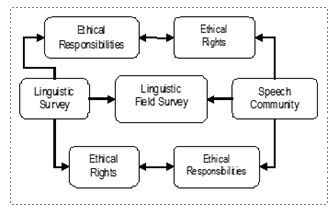
Fig. 1: Interface of two stakeholders in Linguistic Field Survey
2. 'Ethics' in Field Linguistics
The term 'ethics' is taken from Old French 'ethique' obtained from Latin 'ethica', which is derived from Greek 'ēthikḗ', sliced
from Greek 'ēthikós' meaning “of or for morals, moral, expressing character”, originated from Greek 'êthos' meaning “character, moral nature” (https://en.wiktionary.org/wiki/ethics). By definition, it refers to the basic concepts and fundamental principles of decent human conduct. It includes the study of universal values such as the essential equality of all men and women, human or natural rights, obedience to the law of land, concern for health and safety, and also for natural environment (http://www.businessdictionary.com).
Ethics in LFS has received special attention globally in recent times. In case of India, unfortunately, it lacks clarity so as to understand the nature of involvement of people in field related works. It is well known that ethical issues are of great importance in medical studies, legal surveys, and business and media surveys, etc. (Austin 2010a). We believe that it should carry equal status in language documentation and field based linguistic surveys also. Since it aims at developing the relationship between the data collectors and data suppliers it plays a significant role in setting up an introductory platform for starting a documentation work (Bowern 2008). Virtually everything depends on the nature, goal, and management of a field survey through proper understanding the 'nerves' of the community through proper respect and honor to the ethical issues and questions involved in the whole survey (Labov 1972). One has to interpret and analyze the ins and outs of the linguistic community in minute details so that their ethical rights can be adequately addressed. And to do this one has to understand certain factors under the umbrella term 'ethics' which can be helpful in carrying out the steps involved in data elicitation (Hale 1965).
The survey team should be concerned to know whether the subject matter or topic of the survey is socially acceptable, correct, and ethically rational. That means, during an LFS, social values of the speech community have to be given prime importance, and attitudes and reactions of the informants have to be thoroughly taken care off. The judgment of the informants about the importance of a work carried out by the survey team can play a crucial role in the entire course of the work. It is important to note that respect for the moral and ethical values of the community should be clearly visible within the gesture and attitude of the entire survey team.
In order to understand the intricacies of the culture of a speech community, it is necessary to understand how the informants react verbally and nonverbally to be a question. There must be no suppression of any norm on informants while they contribute data during an elicitation process. Their opinions should be reflected in the discourse and it must be free from all constraints. Since each LFS carries specific goal, objective and plan, one has to ignore certain things while
conducting a survey as well as has to mold some questions in a manner so that community members do not feel any constraint and pressure on them at the time of answering these questions.
It is the duty of the survey team to understand the ability,
domains, and interest of the informants before engaging them in data elicitation task. Also, it is their responsibility to be alert so that the informants cannot try to manipulate a survey by attempting to furnish false data which may lead to wrong analysis and false observation.
The underlying truth is that dignity is an inherent property of all human beings and any LFS that involves human subjects must place the highest attention on this value. The survey team must conduct their LFS with a strong commitment to specific research principles and they should honor informants with proper dignity at the time of obtaining data (Macaulay 2004). Moreover, they should be careful in safeguarding the rights of those informants who may be especially vulnerable to exploitation. The survey team must be aware of possible harms that might be done during a survey so that they must seek possible steps to eliminate or reduce these harms to a minimum level.
Ethical issues are linked with the question of justification about the participation of an external team in the act of collecting linguistic and extra-linguistic data which are sole properties of an indigenous speech community. These are also related to some other factors like dealing with the people in the act of data collection, confirming their nature of involvement in the whole process, utilization of data in academics, research and commercial purposes, and eventual benefit of the target speech community. Many such explicit and implicit factors can raise crucial questions with regard to the pertinence of field surveys among the less resourced endangered and tribal language communities. But all these issues can be addressed only when these are decided through open public discourse to justify why a particular LFS within a speech community is absolutely necessary and how this LFS is going to contribute to the overall growth and sustenance of the target community (Rice 2006).
There are several sensitive events and attitudes (such as, likes and dislikes, opinions and views, preferences and objections, etc.) of the members of the community which may have direct impact on the overall scheme of language documentation as well as in the act of
inference deduction from the data and information obtained from the people involved in the survey. The involvement of informants as one of the active agents in a language documentation work is accepted for ages without any objection. Only recently questions are raised regarding the nature of involvement of the informants in field surveys as well as the nature of treatment extended to the informants by the survey team because of several unwanted events that have led to the generation of serious conflicts between the two parties involved in the survey. This has led scholars to raise ethical issues and investigate the nature of 'willful participation' of informants on global platforms to discuss, define, and constitute ethical committees for the purpose of safeguarding the rights of the people involved as informants in surveys as well as defining the responsibilities of the survey team for the interest of the project (Dwyer 2006). Against this background, it is necessary to look into the threads of rights and responsibilities of the survey team and the community who are linked with documentation of languages which are on the verge of extinction.
3. The Expectation
Ethical issues in LFS are primarily concerned with what strategy the survey team adopts when they start interacting with the native speakers of a community. Since there is a huge difference between the objectives of the two groups of people engaged in an LFS, it is imperative that the ethical rights of one group will hardly match with that of the other group. Rather it should be visualized as a reciprocal scheme where one group's rights are another group's responsibility and vice versa. In this context, it should be kept in mind that theoretical study of ethics (under philosophical domain) and what actually applies while one works in the field (Dwyer 2006) are two different things, and it is always better to focus on the practical side than on theoretical postulations in an LFS.
Field linguistics is primarily a way of obtaining data and studying linguistic phenomena. And informants are those who furnish the
urveyors with some samples of the language data, either as repetitions of what has already been said or as creations of what somebody might not have already been said (Samarin 1967). It is always essential to create interest among the participants who are supposed to be involved in the survey to form a strong bond and mutual trust in order to keep the team ethically sound and object-oriented for carrying out the survey.
Informing the speech community in details about the purpose and goal of a particular survey as well as having verbal or written consent from the native language speakers are two foundational tasks which should never be neglected by a survey team engaged in LFSs. This kind of ethical and legal clearance is indispensable for a survey team who is specially dealing with a minority, lesser known, and endangered languages. Apparently, when a team goes to an LFS, the members try to study the object of their study in a natural environment; i.e., they go to study a language in the place where it is spoken by the people who usually speak it (Bowern 2008: 2). In reality,
however, a field survey is not just a simple act of language data collection from the natural environment; it is something more. It develops a network of close personal relations between the field workers and the community members which last much beyond the phase of initial meeting and interaction to spread into the veins for a longer duration to develop an environment of mutual trust, respect, and cooperation.
Therefore understanding social, lingual, cultural, religious, ethnic and ecological fabric of a speech community is a real challenge in determining the areal canvas of a field work. One must have enough idea about the geo-climatic construct and ethnocultural texture of the location of an LFS because this will determine the course of the subsequent survey. Similarly, the selections of native informants, understanding their language ability, usage and tolerant level for the outsiders are other factors that also become matters of great concern before conducting a field work (Abbi 2001).
Some Ethical Questions
According to the norms of various ethical committees, there are several queries before a survey team receives ethical clearance certificate to conduct LFSs (Nagy 2000). The whole process requires comprehensive justification and appropriate responses from the survey team in order to convince the ethical clearance committee. Some important questions that are usually raised in the charter of ethical rights and duties of LFS are usually linked with the following issues:
[1] Research objectives, study design, materials to be used, methods to be adopted, nature of data and amount of sample collection.
Particulars of language community to be involved in a survey.
[3] Demographic details (i.e., age, gender, ethnicity, community,
social group, etc.) of informants considered relevant for the
survey
[4] Justification of geographic variables (region, area, locality, etc.) selected for the survey.
[5] Nature and type of information to be furnished in the questionnaire.
[6] Qualification and experience details of the survey team.
[7] Risk factors involved in the collection of data and information.
[8] Consent Form for participants willing to provide information.
[9] The method of elicitation and storage of data and information.
Confirmation of rights of the participant to withdraw, during or after the interview, from the survey.
[11] Confirmation of destruction or preservation of information
collected.
Remuneration/honorarium for informants (in cash or kind).
Availability of data and information to others (including
informants).
Preservation of data beyond the date of completion of project (how and where)
[15] Sharing of data and results with informants, community,
institutes, organizations, Government, industries, NGOs,
foreign agencies, commercial usage, etc.)
4.1 Consent Form
|
I, the undersigned, hereby inform that I have clearly understood that the purpose of this Linguistic Field Survey is to elicit relevant linguistic data and information (phonological, morphological, lexical, syntactic, grammatical, cultural, sociolinguistic, etc.) from me to document the language we speak. I am willfully participating in the study “XXXXXXXX”, which is being conducted by (name of the Dept.), (name of the Institute), (State), (Country) in my village/locality/region. My participation in this survey entails recording of my speech in digital audio and video format. My participation in this survey is voluntary; and that no penalty or disadvantage will accrue to me for non-participation, not any benefit for participation. The portion of my interview may be played in linguistic discussion and presentation or may be transcribed in written format for demonstration purpose and will be used for linguistic analysis. Additional copies of my interview may be made for backup purposes. Original text and all copies of it will be accessible to investigators, researchers, me, and others working in this area. It will be used for linguistic analysis, research, presentation, and archiving. It will be kept in the digital archive of (name of the Dept.), (name of the Institute), (State), (Country). I am free to contact the Principal Investigator if I have any question or concern relating to this survey or my participation in it. I have full freedom to withdraw myself from this survey, if I want to, at any point of time without showing any reason to the survey team. By signing below, I, hereby, certify that I have read and understood the terms and conditions and that I agree to participate, in accordance with them, in the above named Linguistic Field Survey. I, the undersigned, hereby inform that I have clearly understood that the purpose of this Linguistic Field Survey is to elicit relevant linguistic data and information (phonological, morphological, lexical, syntactic, grammatical, cultural, sociolinguistic, etc.) from me to document the language we speak. I am willfully participating in the study “XXXXXXXX”, which is being conducted by (name of the Dept.), (name of the Institute), (State), (Country) in my village/locality/region. My participation in this survey entails recording of my speech in digital audio and video format. My participation in this survey is voluntary; and that no penalty or disadvantage will accrue to me for non-participation, not any benefit for participation. The portion of my interview may be played in linguistic discussion and presentation or may be transcribed in written format for demonstration purpose and will be used for linguistic analysis. Additional copies of my interview may be made for backup purposes. Original text and all copies of it will be accessible to investigators, researchers, me, and others working in this area. It will be used for linguistic analysis, research, presentation, and archiving. It will be kept in the digital archive of (name of the Dept.), (name of the Institute), (State), (Country). I am free to contact the Principal Investigator if I have any question or concern relating to this survey or my participation in it. I have full freedom to withdraw myself from this survey, if I want to, at any point of time without showing any reason to the survey team. By signing below, I, hereby, certify that I have read and understood the terms and conditions and that I agree to participate, in accordance with them, in the above named Linguistic Field Survey. |
|
Signature of Informant/Participant |
Signature of Investigator |
|
Date: Place: |
Date Place |
Fig. 2: Format of a Consent Form used in LFS
4.2 Compensation as Wage
Giving compensation in exchange for the time spent by informants is a crucial ethical issue. There are two contradictory arguments with regard to paying wages to informants. For some people, it is
unethical not to pay any wage to informants for their long engagement in interviews. Informants should be paid for their time and information that have spent in the interview. For others, payment of wages to informants is not desirable as it can distort the whole goal of a survey, as it opens scope for manipulation of informants in data elicitation by bribing. As a matter of rational judgment, a fair compensation should be given to the time and labor the informants provide. This may,
however, generate various new circumstances. While some informants may show much enthusiasm to provide data for money, others may become skeptical and reluctant, and others may not be ready to accept any compensation for their work.
If money is not the only solution to this problem, one may need to compensate through different means, such as offering food items, offering usable items like bags, pens, note books, umbrellas, etc. On the contrary, there are some who are interested in giving their time just for the sake of money. Moreover, there should be some kind of linearity in compensation of wages to the informants, else conflict may arise among the informants. Also, there is a great risk of jealousy,
attitude, arrogance, ego, self-centeredness among the informants which can make a survey quite difficult to handle. It is always safe to take local public guidance to get the best result.
Administration, Documentation and Usage
The local administration network varies according to geographical areas. In most cases, the survey team should be accustomed to the administrative formalities of the areas where the surveys are to be
carried out (Newman 1992). They must understand the degree of their legal acceptance by the locality, acceptance of their framework by local administrators, community members, police, local interest groups, local government, etc. The survey team has to understand and accept the constraints imposed on dates, times, localities, the level of personal questions and personal choices etc.
The objective of a survey is to elicit data from local informants. This includes documenting their regional stories, folktales, folk songs, folklores, lullabies, personal experiences, literary and artistic works, symbols, names, images and everything which they know relating to their native region, tongue, and customs (Nida 1981). It should be clearly noted that every single information and data that is collected after getting the consent of informants and legal authorities of the
region are indeed the properties of the communities. There should be no confusion in it. The survey team has the right to document the data for the community at large. The team is actually working on behalf of the community (Wilkins 1992).
There should be proper care given to the data that have been
collected so that it is free from any kind of distortion, mutilation, modification or any other sort of deformation of actual data. Also, if the data has been archived and publication rights have been made
accessible, any misuse of the data by the users should be prohibited. Change in content and authenticity of data will be considered as a
violation of rights of the informants and the community.
Intellectual Property Rights and Archiving
Intellectual property rights are the legal frameworks that are
concerned with the possession and circulation of the documented data (i.e., speech or text) which can be termed as 'right to property' or 'right to the medium of economic exchange (Dwyer 2006: 46). When the survey is an ongoing documentation process, one has to decide the copyright norms with the speech community. Here one has to keep in mind that the property right of the data undoubtedly belongs to the informants and the speech community. Once the other hand, once the data is complete and available for analysis and experiment, the property right may be shifted to the content developers (i.e., survey team) with full written permission of the informants. Hereafter the survey team can decide whether to keep the data under self-usage domain or to make is available for global access (Newman 2007: 30).
In language documentation, 'language archive’ should be understood as a large depository of the corpus of data that are documented and developed by the survey team with the help of informants over a long period of time. The purpose of archiving language data is to preserve the language data for future generations and to enable re-usage of data for various applications. The act of archiving language data has recently acquired much wider spectrum by way of including word lists, sentence lists, free discourse texts, cultural events, ceremonies, dances, chants, narratives, literary items, conversations, transcriptions and translations, photographs, ethnolinguistic data, flora and fauna and other related items which are directly connected with life and living of a speech community (Austin 2010b).
Archiving resourceful linguistic data is always an important part in documenting endangered languages and less resourced languages (Craig 1997). Preserving speech data after conducting field surveys and documentation is always a necessity and should be the sole motive of a survey team. As it contributes to maintenance and revitalization of endangered and less resourced languages, it is imperative that the
collected data should be properly archived so that the community members, as well as survey team members, can have easy access to these data. As compared to the earlier techniques, the technologies of conducting and storing the language data is a relatively an easier task in nowadays.
Conclusion
Works relating to documenting endangered, tribal and lesser known language in India needs a careful attention in terms of creating an ethical framework that can be useful for researchers as well as for language communities (Wolfram 1993). Also, there is a need to visualize the application relevance of linguistic data in terms of creating
language teaching materials for language communities. It can be a great achievement for those languages where teaching materials are not available to the community members. It may result in generating scope for employment for the proficient language speakers. In essence, a collaborative interface woven between a survey team and the
informants will purposefully facilitate speech communities to achieve some goals towards the improvement of their linguistic and cultural identities, which in itself can be a great achievement as a result of
ethical and functional collaboration between the stakeholders.
References
Abbi, Anvita (2001) A manual of linguistic field work and structures of Indian languages. Muenchen: Lincom Europa.
Austin, Peter K. (2010a) Communities, ethics and rights in language documentation. Language Documentation and Description. 7(1): 34-54.
Austin, Peter K. (2010b) Current issues in language documentation. Language Documentation and Description. 7(1): 12-33.
Bowern, Claire (2008) Linguistic fieldwork: A practical guide. Basingstoke: Palgrave Macmillan.
Craig, Colette G. (1997) Language contact and language degeneration. In: Florian Coulmas (ed.) The Handbook of Sociolinguistics. Oxford: Blackwell. Pp. 257-270.
Dwyer, Arienne (2006) Ethics and practicalities of cooperative field work and analysis, In: Jost Gippert, Nikolaus Himmelmann & Ulrike Mosel (eds.) Essentials of Language Documentation, Berlin: Mouton de Gruyter. Pp. 31-66.
Hale, Kenneth (1965) On the use of informants in fieldwork. Canadian Journal of Linguistics 10: 108-119.
Hale, Kenneth (1972) Some questions about anthropological linguistics: The role of native knowledge. In: Dell Hymes (ed.), Reinventing Anthropology. New York: Pantheon Books. pp. 382-400.
Labov, William (1972) Some principles of linguistic methodology. Language and Society. 1(1): 97-120.
Macaulay, Monica (2004) Training linguistics students for the realities of fieldwork. Anthropological Linguistics 46(2):194-209.
Nagy, Naomi (2000) What I didn’t know about working in an endangered language community: some fieldwork issues. International Journal of the Sociology of Language 144. 143-160.
Newman, Paul (1992) Fieldwork and field methods in linguistics. California Linguistic Notes. 23:3-8.
Nida, Eugene A. (1981) Informants or colleagues. In: Florian Coulmas (ed.) A Festschrift for native speakers. The Hague: Mouton. Pp. 169-174.
Rice, Keren (2006) Ethical issues in Linguistic Fieldwork: An Overview, Journal of Academic Ethics, 4(10): 123-155.
Samarin, William J. (1967) Field Linguistics: A guide to Linguistic Field Work. New York: Holt, Reinhart, and Winston.
Wilkins, D. (1992) Linguistic research under Aboriginal control: a personal account of fieldwork in Central Australia. Australian Journal of Linguistics 12: 171-200.
Wolfram, Walt (1993) Ethical considerations in language awareness programs. Issues in Applied Linguistics 4(2): 225-255.